Train customer support teams before they're on the phone with a real customer.
Why customer service training fails before the difficult call arrives
De-escalation, complaint handling, staying composed when someone is threatening to churn. These only develop through repetition.
Most reps get that repetition on real customers. That's the wrong place to learn.
In Chambr, CS reps and support agents practice difficult conversations with AI personas before their first live interaction and get scored automatically on every session.
The hard calls stop being hard because reps have already had them.
Your reps have already had the angry customer, the billing dispute, the churn risk before any of them happen live. The AI escalates, pushes back, and disengages based on how the rep handles it.
Every rep, every session, scored automatically against your QA scorecard: empathy, resolution clarity, de-escalation technique. The standard doesn't change based on who ran the training or which shift a rep is on.
Session scores tell managers exactly where each rep is struggling before the coaching conversation starts. No listening to practice calls. No running the same drill in every team meeting.
Chambr gives every new hire practice before their first shift, regardless of manager availability. At Fero Logistics, cold-start hires with zero background were making independent calls by week 3.
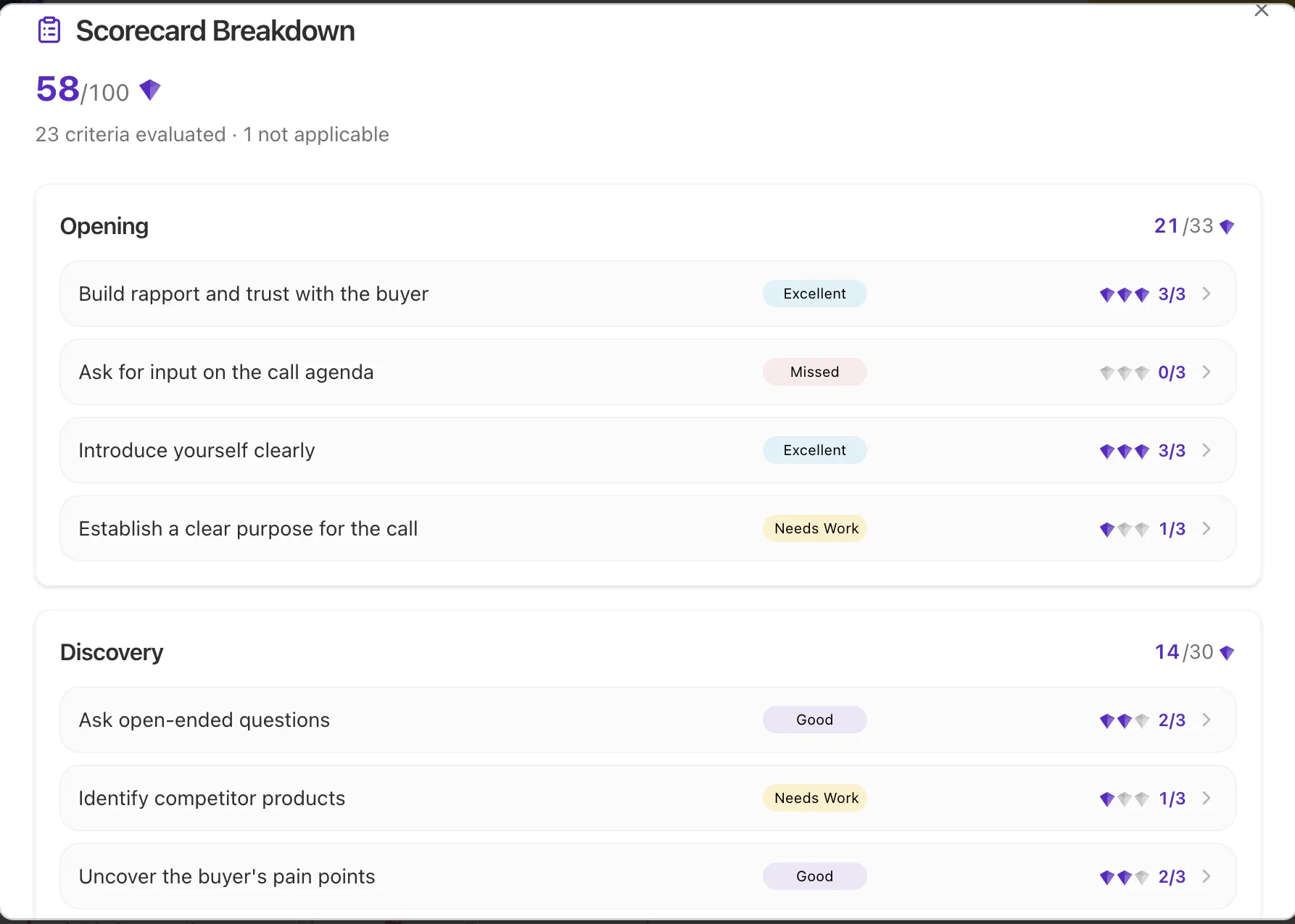
What happens when reps practice before real conversations
Difficult calls stop being surprises.
By the time the real version shows up, it's familiar territory. Handle time drops. First-call resolution goes up. Not because reps got a memo about de-escalation. Because they've done it fifty times already.
Your CSAT stops depending on which manager was available that week.
Gaps show up in the data before they show up on a call. Before they show up in your CSAT.
Managers spend their time on the conversations that actually need them.
Coaching targets the real issue. NPS improves because managers are fixing the right things, not the assumed ones.

How support teams use Chambr at scale
High-volume call center agent training environments face the same problem at scale. Reps handle dozens of interactions per shift. Difficult calls are frequent. Meaningful coaching between calls is rare.
Chambr gives reps a place to practice the hardest conversations before they happen and a structured way to debrief after they do.
QA scorecard automation
Every session scored against your existing criteria.
Practice scenarios
Built from your actual call types and complaint categories.
Manager dashboards
Showing individual and team readiness.
Available 24/7
Reps practice before their shift, between calls, or after a rough one.
Explore other use cases
Your reps are learning how to handle difficult customers on real customers right now.
Frequently asked questions
How is Chambr different from call recording tools for CS training?
Chambr is different from call recording tools because reps practice before the conversation, not after. Recording tools show you what went wrong on a real interaction. Chambr is where reps fix it before the next one. For high-volume CS teams where live interaction time is limited, the gap between volume and real skill development is the core problem. Chambr closes that gap before a real customer pays the price.
Can Chambr handle CS-specific scenarios like de-escalation or complaint handling?
Yes. Chambr personas are fully customizable to your actual call types. You define the scenario: an angry customer, a billing dispute, a churn risk conversation, a complex complaint. The AI responds based on how the rep handles it: pushes back harder if they fumble, eases off if they de-escalate correctly. You build from real situations your team actually faces, not generic templates.
Will Chambr work for teams with high rep turnover?
Yes. High-turnover environments are where Chambr has the most impact. New hires get customer service roleplay practice before their first live interaction regardless of manager availability. At Fero Logistics, cold-start hires with zero background were making independent calls by week 3. The ramp curve shrinks because the learning happens before a real customer is involved.
Does Chambr score CS-specific criteria, not just sales metrics?
Yes. You define the scoring rubric. For CS teams, that typically means empathy, de-escalation technique, and resolution clarity. Upload your existing QA scorecard and Chambr runs QA scorecard automation on every session automatically. The criteria are yours, applied consistently to every rep, every time.
How much manager time does Chambr save for CS teams?
At Fero Logistics, managers saved 10 to 15 hours per week that had been going into mock calls and shadowing. For CS teams running multiple shifts with distributed managers, the leverage is higher. Managers review scores and coach on specific gaps instead of sitting in on practice calls or running the same drill in every team meeting. That time shows up in CSAT and escalation rate, not just headcount savings.
Does Chambr integrate with existing CS tools like Zendesk or Intercom?
Chambr works alongside your existing CS tools and scores against your QA criteria independently. Your team keeps using Zendesk or Intercom for live interactions. Chambr is where reps practice before those interactions happen. Bring your current QA scorecard to setup and Chambr scores against it automatically from day one.
How long does it take to set up CS training scenarios in Chambr?
Most teams have their first scenario live within a day. You define the customer persona, the complaint type, and the scoring criteria. If you already have a QA scorecard, upload it directly and Chambr scores against it automatically. Building a full multi-scenario training track typically takes a few days of setup.
Can Chambr handle multilingual CS teams?
Yes. Chambr supports 100+ languages including Mandarin Chinese, Spanish, English, Hindi, Arabic, Portuguese, Bengali, French, Russian, Japanese, German, Korean, Turkish, Vietnamese, and Italian. If your team handles customer interactions in multiple languages, practice scenarios run in each one.